Turkish Pide Bread (Ramazan Pidesi) Recipe
Introduction
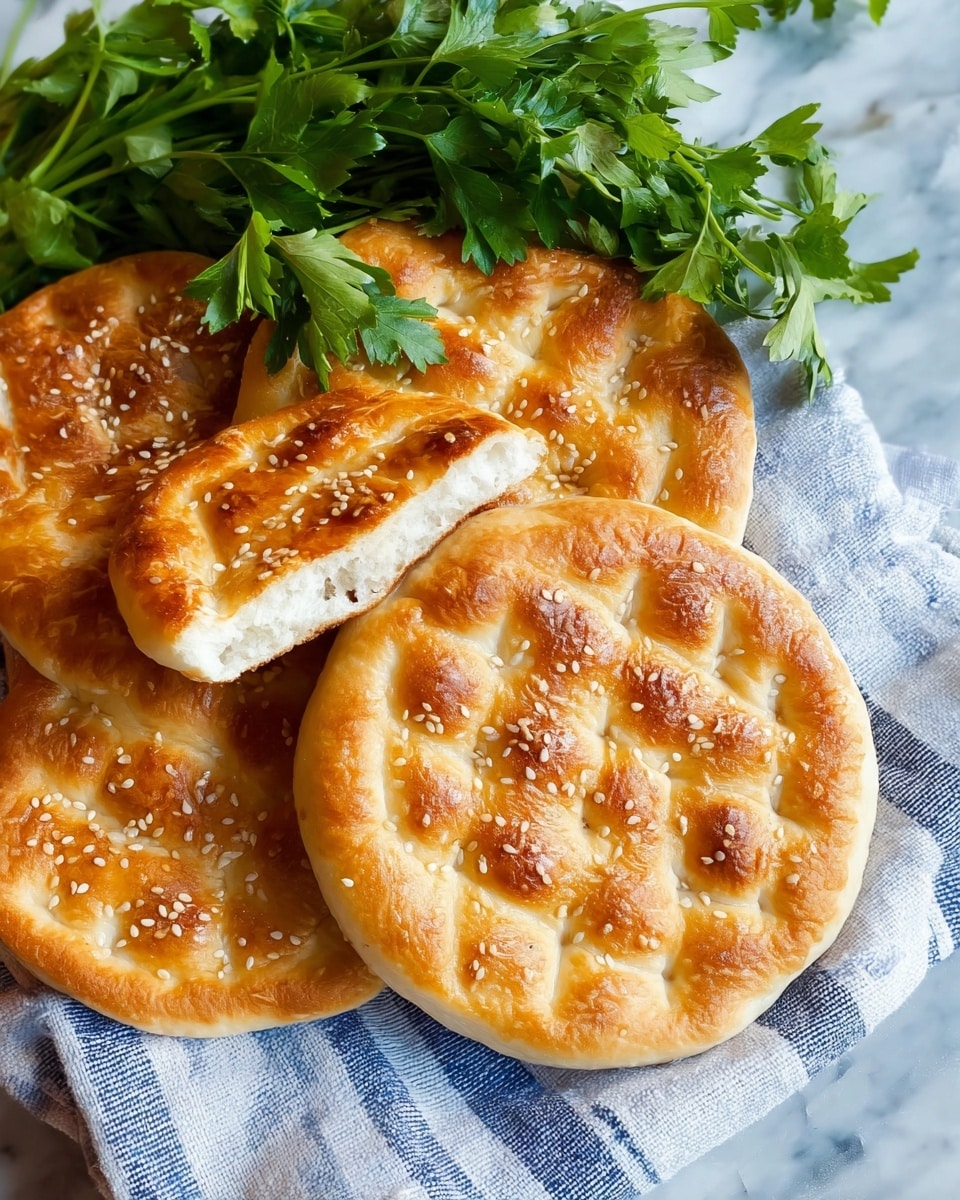
Turkish Pide Bread, also known as Ramazan Pidesi, is a soft and flavorful flatbread traditionally enjoyed during Ramadan. Its delicate crumb and distinctive diamond-patterned crust topped with sesame and nigella seeds make it a delight for any bread lover.
Ingredients
- 1/2 cup milk (warm)
- 1/2 cup water (warm)
- 2 tbsp olive oil
- 1 tsp sugar
- 1/2 tsp salt
- 2 tsp instant dry yeast
- 1 large egg white
- 2 1/3 cup bread flour
- 1 large egg yolk
- 1 tbsp plain yogurt
- 1 tbsp water
- 2 tbsp sesame seeds (to top)
- 2 tbsp nigella seeds
Instructions
- Step 1: In a large bowl, mix warm milk, warm water, olive oil, sugar, salt, instant dry yeast, and egg white until combined.
- Step 2: Gradually add the bread flour in batches, stirring with a wooden spoon until the dough comes together. The dough will be tacky—there is no need to knead.
- Step 3: Cover the bowl and let the dough rise in a draft-free spot, such as an off oven, for 40 minutes.
- Step 4: Lightly flour your work surface, transfer the dough, and shape it into a boule. Cover with a kitchen towel and rest for 20 minutes.
- Step 5: Preheat the oven to 400°F (200°C) and line a baking sheet with parchment paper.
- Step 6: In a small bowl, mix egg yolk, yogurt, and water for the glaze; set aside.
- Step 7: Place the dough on the prepared baking sheet. Brush it with some glaze, then use your fingers to gently stretch it into an oval about 1/2 inch thick.
- Step 8: With your fingers, press indentations about 1 inch from the edge to form a circular border. Then make diagonal indentations inside the circle in two directions to create a diamond pattern. Sprinkle sesame and nigella seeds on top.
- Step 9: Bake for 25 minutes or until the bread is golden brown.
Tips & Variations
- For a softer crust, brush the baked bread lightly with melted butter while still warm.
- Substitute plain yogurt with Greek yogurt for a slightly tangier flavor in the glaze.
- If you don’t have nigella seeds, substitute them with extra sesame seeds or poppy seeds.
- Use bread flour for best texture; all-purpose flour can be used but may yield a slightly different crumb.
Storage
Store the pide bread in an airtight container at room temperature for up to 2 days. To keep it fresh longer, wrap tightly in plastic wrap and freeze for up to 1 month. Reheat by warming in an oven at 350°F (175°C) for 5–7 minutes to restore its softness.
How to Serve
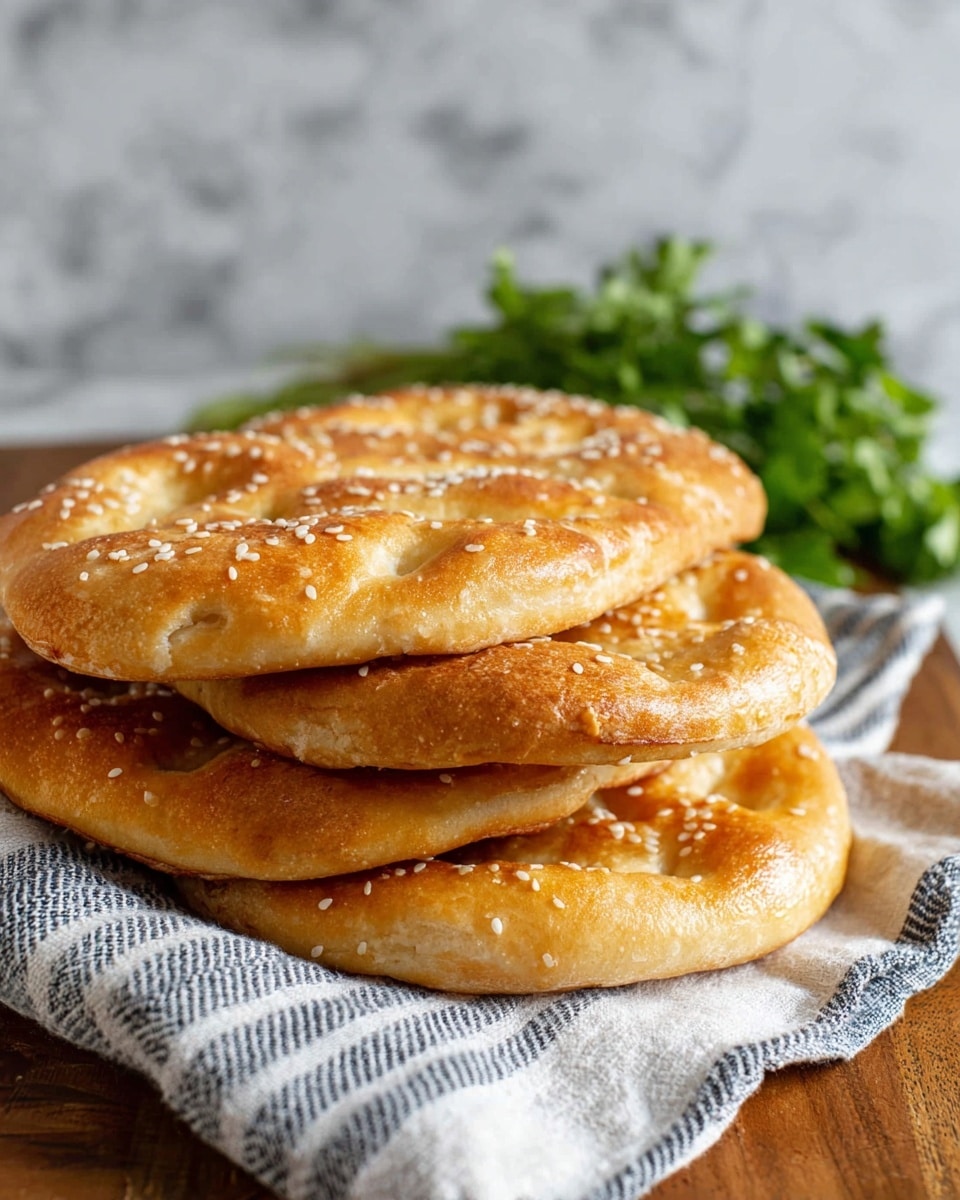
Serve this delicious recipe with your favorite sides.
FAQs
Can I make the dough ahead of time?
Yes, you can prepare the dough and refrigerate it overnight after the first rise. Before shaping, let it come to room temperature and rise again as instructed.
What can I serve with Turkish Pide Bread?
It pairs beautifully with dips like hummus, baba ganoush, and tzatziki, or alongside soups, stews, and grilled meats.
PrintTurkish Pide Bread (Ramazan Pidesi) Recipe

This traditional Turkish Pide Bread, also known as Ramazan Pidesi, is a soft, slightly chewy flatbread typically enjoyed during Ramadan. It features a tender dough enriched with milk and olive oil, topped with sesame and nigella seeds. The unique pattern of indentations gives it its characteristic look and texture, making it perfect for dipping or accompanying meals.
- Prep Time: 15 minutes
- Cook Time: 25 minutes
- Total Time: 1 hour 20 minutes
- Yield: 1 large oval pide bread (serves 6-8) 1x
- Category: Bread
- Method: Baking
- Cuisine: Turkish
Ingredients
Dough
- 1/2 cup warm milk
- 1/2 cup warm water
- 2 tbsp olive oil
- 1 tsp sugar
- 1/2 tsp salt
- 2 tsp instant dry yeast
- 1 large egg white
- 2 1/3 cups bread flour
Glaze and Topping
- 1 large egg yolk
- 1 tbsp plain yogurt
- 1 tbsp water
- 2 tbsp sesame seeds
- 2 tbsp nigella seeds
Instructions
- Prepare the yeast mixture: In a large bowl, combine warm milk, warm water, olive oil, sugar, salt, instant dry yeast, and egg white. Stir to mix evenly and activate the yeast.
- Mix the dough: Gradually add the bread flour in batches, stirring with a wooden spoon until the dough comes together into a tacky but cohesive mass. There is no need to knead the dough thoroughly.
- First rise: Cover the bowl and place it in a draft-free area, such as an off oven, and let the dough rise for 40 minutes until it has increased in size.
- Shape the dough: Lightly flour your work surface and transfer the dough onto it. Shape the dough into a boule (round ball), cover with a kitchen towel, and allow it to rest and rise again for 20 minutes.
- Preheat oven and prepare baking sheet: Preheat your oven to 400°F (200°C) and line a baking sheet with parchment paper for easy removal and even baking.
- Make the glaze: In a small bowl, whisk together the egg yolk, plain yogurt, and water. Set this glaze aside.
- Shape and decorate the bread: Place the dough on the prepared baking sheet. Brush the surface with some of the glaze, then use your fingers to gently stretch and shape the dough into an oval about 1/2 inch thick.
- Create indentations and add seeds: Using your fingers, press indentations along the edge about 1 inch from the rim to form a circular pattern. Then create diagonal indentations inside that circle to form diamond shapes. Sprinkle sesame seeds and nigella seeds evenly on top.
- Bake the bread: Place the baking sheet in the preheated oven and bake the bread for 25 minutes or until it turns golden brown and cooked through.
Notes
- The dough is tacky and soft; avoid adding too much flour during shaping to keep the bread tender.
- Using warm milk and water activates the yeast properly, ensuring good rise.
- The distinctive indentations help the bread bake evenly and give it its traditional look.
- Keep the baking sheet lined with parchment paper to prevent sticking and ease cleanup.
- Serve the pide fresh and warm for best flavor, typically paired with soups, stews, or as a meal accompaniment.
Keywords: Turkish Pide, Ramazan Pidesi, Turkish bread, flatbread, Ramadan bread, sesame seed bread, nigella seed bread, traditional Turkish recipe