Homemade Bagels with Everything Seasoning Recipe
Introduction
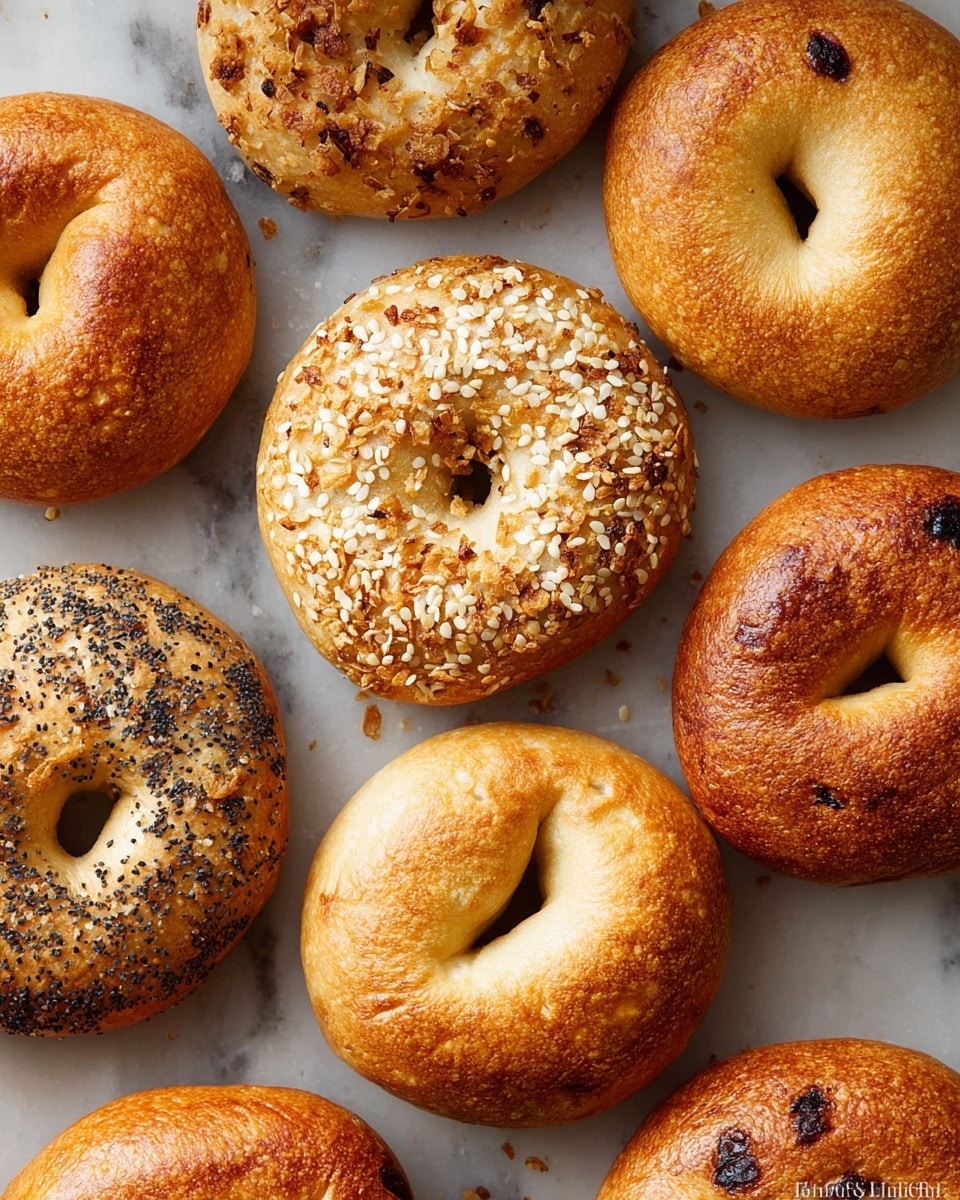
Making homemade bagels is a rewarding process that yields chewy, golden rings perfect for breakfast or snacks. These bagels have a crisp crust and a soft interior, thanks to a traditional boil before baking. With simple ingredients and an overnight chill, you’ll enjoy bakery-style bagels at home.
Ingredients
- 1 ⅛ cup warm water (1 cup + 2 Tbsp, about 90-110℉)
- 1 tablespoon barley malt syrup (21 g)
- 1 ½ teaspoon dry active yeast
- 3½ cups unbleached bread flour (455 g)
- 1 tablespoon coarse kosher salt
- 4 quarts water (for poaching)
- 2 tablespoons barley malt syrup (for poaching)
- 1 ½ tablespoon baking soda (for poaching)
- ½ tablespoon coarse kosher salt (for poaching)
- Egg white wash
- Everything seasoning mix, poppy seeds, sesame seeds, or other toppings (optional)
Instructions
- Step 1: In a small bowl, whisk together warm water, barley malt syrup, and yeast. Let sit for 8-10 minutes until the mixture is cloudy, aromatic, and foamy, indicating the yeast is activated.
- Step 2: In the bowl of a stand mixer fitted with a dough hook, combine flour and salt. Add the yeast mixture and mix on the lowest speed for 3 minutes. Stop and let the dough rest for 5 minutes.
- Step 3: Resume mixing for another 3 minutes on the lowest speed until the dough is stiff yet supple. Transfer to a lightly oiled bowl, cover with plastic wrap, and let rise at room temperature for 1 hour.
- Step 4: Divide the dough into 8 equal pieces (about 4 oz each). Shape each piece into a loose ball. Flatten slightly and poke a hole through the center with your thumb. Stretch the hole to about 2 inches in diameter by rotating the dough with both thumbs.
- Step 5: Place formed bagels on a greased, parchment-lined sheet pan. Mist with oil or cooking spray and cover with plastic wrap. Refrigerate overnight to chill.
- Step 6: The next morning, prepare the poaching liquid by bringing 4 quarts of water to a boil in a large pot, making sure it’s at least 4 inches deep. Lower the heat to a simmer and add barley malt syrup, baking soda, and kosher salt.
- Step 7: Remove bagels from the fridge. To test readiness, place a bagel in a bowl of cold water. If it floats, it’s ready to boil. If it sinks, let it rest at room temperature for 15-30 minutes. Preheat the oven to 500°F.
- Step 8: Gently lower bagels into the simmering poaching liquid using a slotted spoon. Boil for 1 minute, flip, and boil another minute. Remove and place on a lightly oiled, parchment-lined sheet tray with the domed side up. Brush tops with egg white and sprinkle toppings if desired.
- Step 9: Lower the oven temperature to 450°F. Bake bagels for 8 minutes, then rotate the pan. If bottoms brown too quickly, place a second baking tray underneath. Continue baking for another 8-10 minutes until golden brown. Cool on a wire rack before serving.
Tips & Variations
- Use barley malt syrup in the dough and poaching water for authentic flavor and color; honey or brown sugar can be substituted in a pinch.
- Experiment with different toppings like sesame seeds, poppy seeds, or an everything seasoning blend for variety.
- Chilling the shaped bagels overnight develops flavor and improves texture.
- Ensure water for yeast activation is not too hot or it can kill the yeast—ideally between 90-110℉.
Storage
Store cooled bagels in a paper bag or bread box for up to 2 days to keep the crust crisp. For longer storage, freeze bagels in a sealed plastic bag for up to 3 months. To reheat, toast from frozen or warm in a 350°F oven for 5-10 minutes.
How to Serve

Serve this delicious recipe with your favorite sides.
FAQs
Can I use instant yeast instead of active dry yeast?
Yes, you can substitute instant yeast but skip the activation step and add it directly to the flour. You may need to adjust rise times slightly.
Why do bagels need to be boiled before baking?
Boiling sets the crust and creates the bagel’s characteristic chewy texture by gelatinizing the starch on the surface, which also helps achieve a glossy, golden finish after baking.
PrintHomemade Bagels with Everything Seasoning Recipe
This classic bagel recipe delivers chewy, golden-brown bagels with a crisp crust and soft interior. Made with a yeast-based dough enriched with barley malt syrup, these bagels are boiled briefly before baking to achieve their traditional texture and taste. Perfect for topping with everything seasoning, sesame seeds, or poppy seeds, they make an excellent homemade bread option for breakfast or sandwiches.
- Prep Time: 20 minutes (plus overnight chilling and 1 hour rise)
- Cook Time: 20 minutes
- Total Time: Approximately 12 hours (including chilling and rising time)
- Yield: 8 bagels 1x
- Category: Bread
- Method: Baking
- Cuisine: American
Ingredients
Dough Ingredients
- 1 ⅛ cup warm water (1 cup + 2 Tbsp, about 90-110℉)
- 1 Tablespoon barley malt syrup (21 g)
- 1 ½ teaspoon dry active yeast
- 3½ cups unbleached bread flour (455 g)
- 1 Tablespoon coarse kosher salt
Poaching Liquid
- 4 quarts water
- 2 Tablespoons barley malt syrup
- 1 ½ Tablespoons baking soda
- ½ Tablespoon coarse kosher salt
Toppings & Finishing
- Egg white wash
- Everything seasoning mix, poppy seeds, sesame seeds, or other preferred toppings
Instructions
- Activate Yeast: In a small bowl, whisk warm water, barley malt syrup, and yeast together. Let the mixture sit for 8-10 minutes until it becomes cloudy, aromatic, and foamy, indicating that the yeast is activated and ready to use.
- Mix Dough: In the bowl of a stand mixer fitted with a dough hook, combine the bread flour and salt. Stir to blend. Pour in the yeast mixture and mix on the lowest speed for 3 minutes. Stop the mixer and let the dough rest for 5 minutes.
- Knead and First Rise: Resume mixing on the lowest speed for another 3 minutes until the dough is stiff yet supple. Transfer the dough to a clean, lightly oiled bowl. Cover tightly with plastic wrap and let it rise at room temperature for 1 hour.
- Shape Bagels: After rising, divide the dough into 8 equal pieces, weighing about 4 oz each. Shape each piece into a loose ball. Flatten slightly and poke a hole through the center with your thumb. Stretch the hole to about 2 inches in diameter by rotating the dough with both thumbs.
- Chill Bagels: Place shaped bagels on a greased parchment-lined sheet pan. Mist lightly with oil or cooking spray, then cover with plastic wrap. Refrigerate overnight to develop flavor and texture.
- Prepare Poaching Liquid: The next day, in a large pot with at least 4 inches of water, bring the water to a boil covered. Reduce heat to maintain a simmer and add the barley malt syrup, baking soda, and kosher salt to the poaching water.
- Float Test and Preheat Oven: Remove bagels from the fridge. To check readiness, place a bagel in cold water: if it floats, it’s ready to boil; if it sinks, let it rest at room temperature for 15-30 minutes and retest. Meanwhile, preheat the oven to 500°F (260°C).
- Boil Bagels: Use a slotted spoon to gently lower bagels into the simmering poaching liquid, as many as fit comfortably. Boil for 1 minute, flip and boil for another minute. Remove and place bagels domed side up on a lightly oiled parchment-lined sheet tray. Brush tops with egg white and add toppings if desired.
- Bake Bagels: Lower oven temperature to 450°F (232°C). Bake bagels for 8 minutes, then rotate the pan and check bottoms for browning. If browning too fast, place another baking sheet underneath. Continue baking for another 8-10 minutes until the bagels are a rich golden brown. Cool on a wire rack before serving.
Notes
- Barley malt syrup is essential for authentic bagel flavor and crust; substitute with honey if unavailable.
- Do not skip the chilling step overnight for best texture and flavor development.
- The float test ensures proper fermentation and avoids under-proofed dough.
- Handle dough gently when shaping to maintain air bubbles for a chewy texture.
- Boiling time affects crust: longer boiling yields a thicker crust.
- Use bread flour with high protein for optimal chewiness.
Keywords: bagels, homemade bagels, yeast bagels, boiled bagels, baking bread, breakfast bread, chewy bagels