Easy Small Batch Ciabatta Rolls Recipe
Introduction
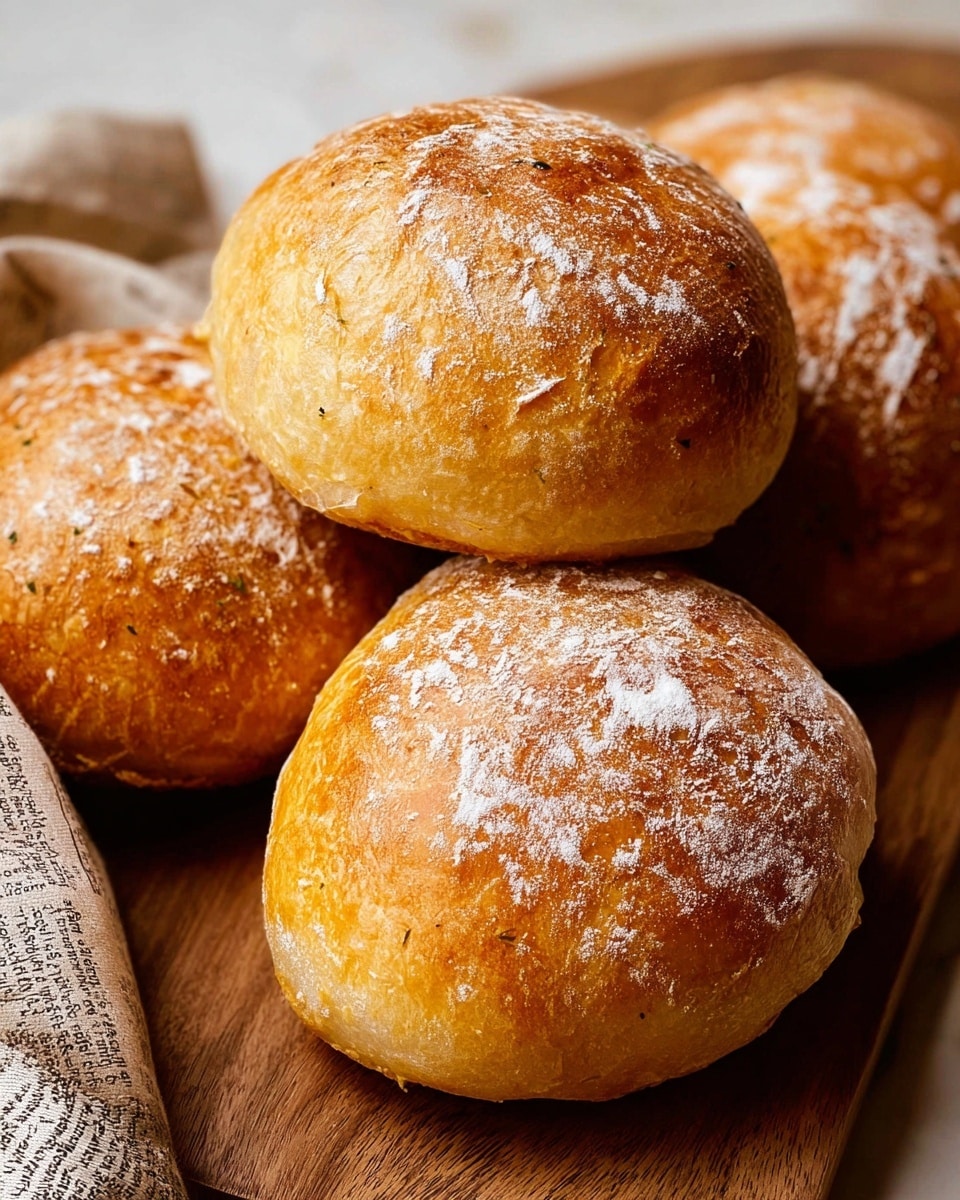
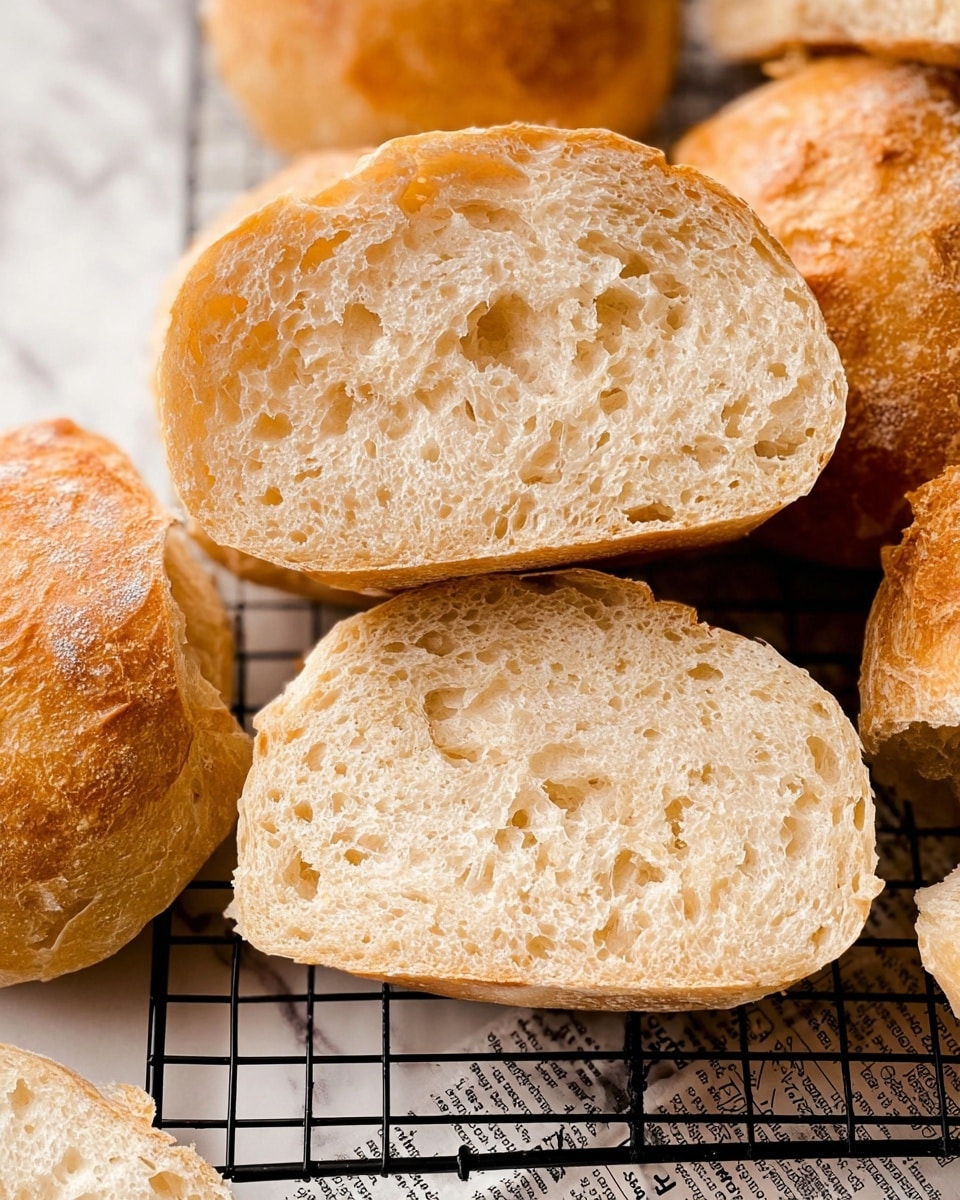
These easy small batch ciabatta rolls are perfect for when you want fresh, homemade bread without the hassle of a large batch. Soft, airy, and with a crisp crust, they make a wonderful accompaniment to any meal or just a tasty snack.
Ingredients
- 1 teaspoon instant yeast
- 240 grams water, at room temperature (approximately 1 cup)
- 300 grams all-purpose flour (approximately 2.5 cups)
- 1 teaspoon salt
Instructions
- Step 1: In a small cup, dissolve the instant yeast in lukewarm water and stir to mix. Let it sit for 2 minutes until it starts to bubble and develop a yeasty aroma.
- Step 2: In a large bowl, combine the flour and salt. Pour in the yeast mixture and whisk until fully combined, scraping down the sides. The dough will be very sticky and wet.
- Step 3: Cover the bowl with plastic wrap and let it sit at room temperature for 1 hour to rise. A warmer room will speed up fermentation.
- Step 4: Wet your hands and perform a stretch and fold by folding each edge of the dough into the center. Cover and rest for 30 minutes. Repeat this stretch and fold step two more times, allowing a 30-minute rest after each fold. The dough should nearly double in size after these steps.
- Step 5: Transfer the sticky dough to a floured surface. Sprinkle with flour and gently shape it into a rectangle without pressing out the air holes.
- Step 6: Roll the dough into a log, seal the edge, and divide into 4-5 equal parts. Place the pieces at least two inches apart on a floured surface for the final proofing and let rest for 40 minutes.
- Step 7: Preheat the oven to 420°F (215°C). Place a baking pan filled with water at the bottom of the oven to create steam. Carefully transfer the rolls onto a parchment-lined baking tray, dust with flour, and spray with water immediately before baking.
- Step 8: Bake the rolls for 20 minutes until golden and hollow-sounding when tapped. Let cool on a wire rack for 20 minutes before serving.
Tips & Variations
- Use a kitchen scale for precise measurements to ensure the perfect dough consistency.
- If you prefer a crunchier crust, bake the rolls a few minutes longer and finish under the broiler for 1-2 minutes, watching carefully.
- Add herbs like rosemary or thyme to the dough for extra flavor.
- For a softer crust, brush the rolls with melted butter right after baking.
Storage
Store the ciabatta rolls in an airtight container or paper bag at room temperature for up to 2 days. To keep them fresher longer, freeze the rolls in a sealed bag for up to 1 month. Reheat by warming in a preheated oven at 350°F (175°C) for about 5-10 minutes to restore freshness and crustiness.
How to Serve
Serve this delicious recipe with your favorite sides.
FAQs
Can I use active dry yeast instead of instant yeast?
Yes, but you should dissolve active dry yeast in warm water and let it proof for about 5-10 minutes until frothy before mixing with the flour. Adjust the amount slightly if needed.
Why is the dough so sticky?
This ciabatta dough has a high hydration ratio, which makes it very wet and sticky. This is normal and helps create the open crumb and airy texture typical of ciabatta bread.
PrintEasy Small Batch Ciabatta Rolls Recipe

These Easy Small Batch Ciabatta Rolls feature a wet, sticky dough with high hydration, creating light, airy, and rustic bread rolls with a chewy crust. Perfect for small gatherings, these rolls are made with simple ingredients and a method involving stretch and folds to develop texture and gluten, baked with steam for a crisp crust.
- Prep Time: 10 minutes
- Cook Time: 20 minutes
- Total Time: 3 hours 40 minutes
- Yield: 4–5 ciabatta rolls 1x
- Category: Bread
- Method: Baking
- Cuisine: Italian
Ingredients
Dough Ingredients
- 1 teaspoon instant yeast
- 240 grams water, at room temperature (approximately 1 cup)
- 300 grams all-purpose flour (approximately 2.5 cups)
- 1 teaspoon salt
Instructions
- Prepare the Dough: In a small cup, dissolve the instant yeast in lukewarm water and stir to mix together. Let it sit for 2 minutes until it starts to bubble and develop a yeasty aroma. In a large bowl, add the flour and salt. Pour the yeast mixture into the bowl and whisk until fully combined, scraping down the sides. The dough will be very sticky and wet, with about 80% hydration. Cover with plastic wrap and let it sit at room temperature for 1 hour.
- Stretch and Fold the Dough: Wet your hands with water to make handling easier. Stretch and fold the dough in the bowl by folding each edge into the center, one edge at a time. This should take less than a minute for all four sides. Cover the dough and let it rest for 30 minutes. Repeat the stretch and fold process two more times, allowing the dough to rest for 30 minutes after each fold. After three rounds of folding and resting, the dough should have risen and nearly doubled in size.
- Shape the Dough: Transfer the dough onto a floured surface, sprinkling a little flour over the sticky dough to help with handling. Shape the dough gently into a rectangle by pulling dough from underneath without pressing it to preserve the air holes. Roll the rectangle into a log and press the edge to seal. Divide the log into 4-5 equal parts and place them at least two inches apart on a well-floured surface. Let the dough rest and proof for about 40 minutes.
- Bake the Ciabatta Rolls: Preheat your oven to 420°F (215°C). Place a baking pan filled with water at the bottom of the oven to generate steam. Transfer the shaped rolls carefully onto a parchment-lined 8×12-inch baking tray, dusting lightly with flour if needed. Once the oven is steamy and preheated, spray water over the dough immediately and slide the baking tray in. Bake for 20 minutes until the rolls have a golden crust.
- Cool and Serve: Remove the rolls from the oven and let them cool on a rack for 20 minutes. Test doneness by tapping the bottom of a roll; it should sound hollow indicating it is fully baked and done.
Notes
- Use room temperature water to help activate the yeast effectively.
- The dough will be very sticky due to high hydration; flour your hands and work surface lightly to prevent sticking.
- Stretch and folds develop gluten structure without kneading, essential for ciabatta’s airy texture.
- Steam in the oven is critical to achieve a crisp crust and proper oven spring.
- Allow the bread to cool completely before slicing for best texture and crumb.
Keywords: ciabatta rolls, small batch bread, easy ciabatta, Italian bread, homemade rolls, stretch and fold bread