
Croissant Bread Loaf Recipe
Introduction
Croissant bread is a buttery, flaky loaf that combines the best qualities of croissants and sandwich bread. This recipe guides you through making a tender, laminated dough that bakes into a golden, pull-apart loaf perfect for breakfast or snacks. It’s a rewarding baking project for anyone looking to elevate their homemade bread game.

Ingredients
- 1 cup (240ml) whole milk, warmed to about 110°F (43°C)
- 2 and 1/4 teaspoons (7g) instant or active dry yeast (1 standard packet)
- 3 Tablespoons (38g) granulated sugar
- 1 and 1/4 teaspoons salt
- 3 Tablespoons (43g) unsalted or salted butter, softened to room temperature and cut into 3 equal pieces
- 3 cups (375g) all-purpose flour (spooned & leveled), plus more as needed and for lamination
- 3/4 cup (12 Tbsp; 170g) salted butter, slightly softened (for lamination)
- 1 large egg, cold or room temperature
- 1 Tablespoon (15ml) water
Instructions
- Step 1: Whisk the warm milk, yeast, and sugar together in the bowl of a stand mixer fitted with a dough hook. Cover and let sit about 5 minutes until foamy. If mixing by hand, use a large bowl and a wooden spoon or silicone spatula.
- Step 2: Add salt, softened butter, and 2 cups (250g) flour. Beat on medium speed 2 minutes, scraping the bowl as needed. Add remaining flour and beat on low until a soft dough forms, pulling away from the bowl sides. Add 2–3 more tablespoons flour if dough is too sticky, but avoid adding too much.
- Step 3: Knead dough on medium speed for 5 minutes in the mixer, or on a lightly floured surface by hand for 5 minutes, adding small amounts of flour if too sticky. The dough should be soft but elastic. Perform a windowpane test to check readiness.
- Step 4: Lightly grease a large bowl. Place dough inside and turn to coat with oil. Cover and let rise in a warm spot for 1.5–2 hours until nearly doubled.
- Step 5: Punch down the dough and place it on a silicone mat, parchment, or floured baking sheet. Stretch into a 10×14-inch (25x35cm) rectangle and refrigerate covered for 20 minutes.
- Step 6: Slice the 3/4 cup salted butter into 1/4-inch thick pieces. Make sure it’s softened but not melting. Prepare for lamination by reviewing tips on handling delicate dough and butter.
- Step 7: Remove dough from fridge. Spread butter down center third of dough. Fold one edge over butter, then the other, sealing edges to enclose butter. Roll into a 9×12-inch rectangle, fold again like a letter, cover, and refrigerate 20 minutes.
- Step 8: Repeat rolling and folding two more times, refrigerating for 20 minutes between each fold to maintain layers.
- Step 9: For the final lamination, roll dough into a 9×12-inch rectangle and fold once more. Then roll tightly from a short edge into a log. Cut log into 5 even rolls.
- Step 10: Grease a 9×5-inch (23x13cm) loaf pan. Arrange rolls seam side down in pan, cover tightly, and let rise 45–60 minutes until slightly puffy.
- Step 11: Preheat oven to 350°F (177°C). Whisk egg and water for egg wash. Brush loaf generously.
- Step 12: Bake for 1 hour, tenting with foil after 25 minutes to prevent over-browning. Loaf is done when internal temperature reaches 195°F (90°C).
- Step 13: Cool loaf in pan for 30 minutes. Run a knife around edges and remove loaf to a wire rack. Cool at least 15 minutes before slicing to prevent crumb from falling apart.
Tips & Variations
- Use a silicone baking mat to prevent dough from sliding and ease rolling during lamination.
- If dough tears during rolling, lightly sprinkle flour over exposed butter and press gently to seal.
- Allow dough to rest for 5 minutes if it’s too resistant to rolling to help the gluten relax.
- Do not extend refrigeration times after folding, as this can cause the dough to over-expand.
- Try swapping salted butter for unsalted, increasing salt slightly in the dough if desired.
Storage
Store leftover croissant bread covered at room temperature for up to 3 days or refrigerate for up to 1 week. You can freeze it wrapped tightly for up to 3 months; thaw at room temperature or overnight in the fridge. Warm slices gently before serving to restore softness.
How to Serve
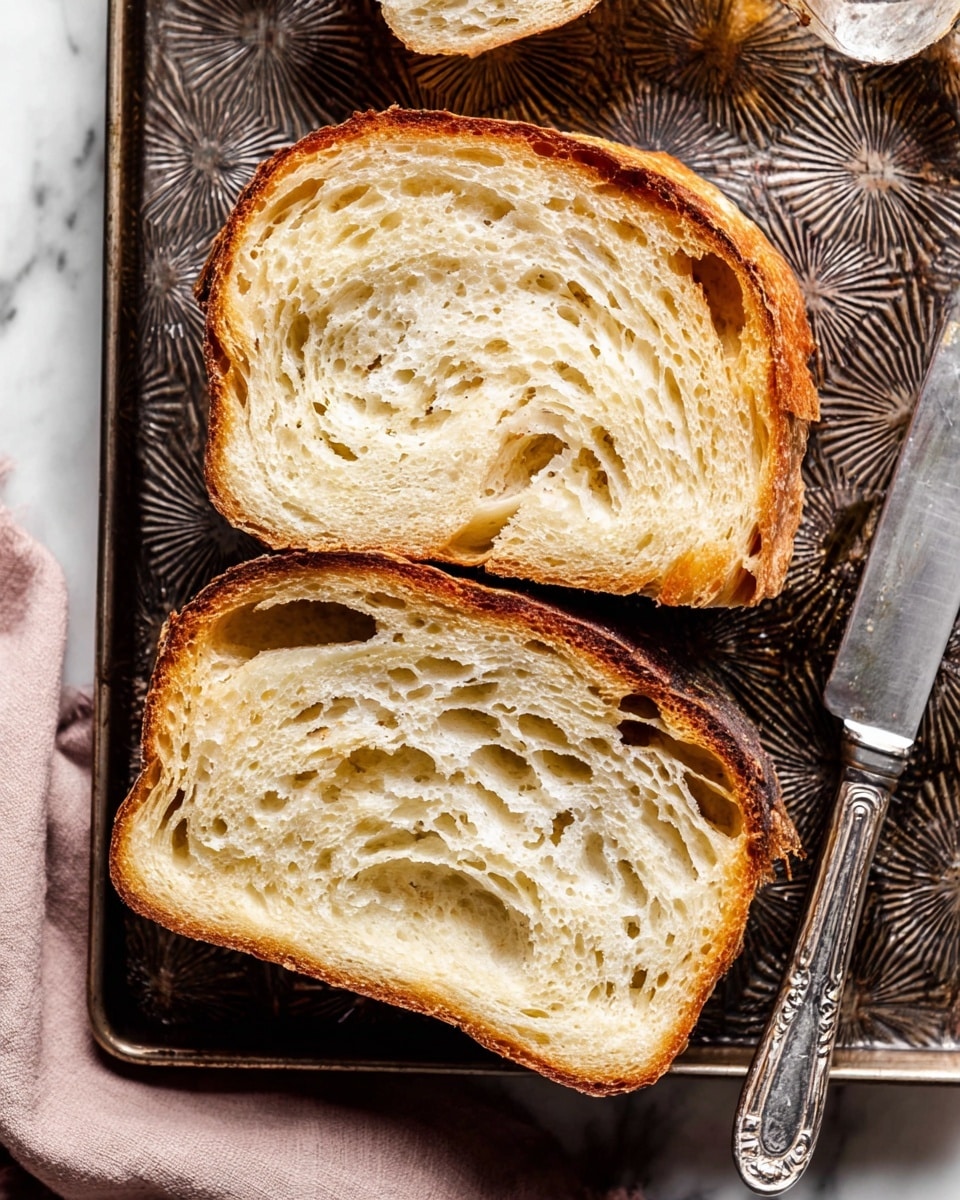
Serve this delicious recipe with your favorite sides.
FAQs
Can I use active dry yeast instead of instant yeast?
Yes, active dry yeast works well; just be sure to proof it in warm milk with sugar until foamy before mixing dough.
Why is refrigerating the dough important during lamination?
Chilling relaxes the gluten and keeps the butter firm, which helps create distinct flaky layers and makes rolling easier.
PrintCroissant Bread Loaf Recipe

This Croissant Bread Loaf is a buttery, flaky, and tender bread made by laminating dough with layers of salted butter, then rolled and baked into a loaf. Combining the flaky texture of classic croissants with the ease of slicing bread, this recipe involves yeast dough preparation, multiple laminations, and careful resting and baking steps to achieve a golden, soft, and flavorful bread perfect for breakfast or as a snack.
- Prep Time: 1 hour 30 minutes
- Cook Time: 1 hour
- Total Time: 3 hours 30 minutes
- Yield: 1 loaf (5 rolls sliced) 1x
- Category: Bread
- Method: Baking
- Cuisine: French-inspired
Ingredients
Dough Ingredients
- 1 cup (240ml) whole milk, warmed to about 110°F (43°C)
- 2 and 1/4 teaspoons (7g) instant or active dry yeast (1 standard packet)
- 3 Tablespoons (38g) granulated sugar
- 1 and 1/4 teaspoons salt
- 3 Tablespoons (43g) unsalted or salted butter, softened to room temperature and cut into 3 equal pieces
- 3 cups (375g) all-purpose flour (spooned & leveled), plus more as needed and for lamination
Lamination Butter
- 3/4 cup (12 Tbsp; 170g) salted butter, slightly softened (for lamination)
Egg Wash
- 1 large egg, cold or room temperature
- 1 Tablespoon (15ml) water
Instructions
- Preliminary notes: Watch the video tutorial and review the step-by-step photos before starting. Prepare refrigeration space for resting and lamination steps.
- Prepare the dough: In the stand mixer bowl fitted with a dough hook, whisk together warm milk, yeast, and sugar. Cover and let sit for about 5 minutes until foamy. Add salt, softened butter chunks, and 2 cups of flour then beat on medium speed for 2 minutes, scraping the bowl as needed. Add remaining flour and beat on low speed until a soft dough forms that pulls away from the bowl. Adjust flour slightly if dough is too sticky but keep it soft.
- Knead the dough: Continue mixing in the mixer on low speed for 5 more minutes, or knead by hand on a floured surface for 5 minutes until dough is soft and elastic, passing the windowpane test.
- First rise: Lightly grease a large bowl, place the dough inside turning to coat with oil, cover with wrap or towel, and let rise in a warm spot for 1.5–2 hours until nearly doubled in size.
- Flatten the dough: Punch down the risen dough and place it on a silicone baking mat or floured baking sheet. Gently stretch into a 10×14-inch rectangle. Cover and chill in the refrigerator for 20 minutes.
- Prepare lamination butter: Slice the salted butter into 1/4-inch thick pieces, ensuring it’s slightly softened but not overly soft, ready for laminating.
- First lamination: Remove dough from fridge, place butter slices down the center third of the dough. Fold the dough edges over the butter like a business letter, pinch ends to seal. Rotate dough, lightly flour, roll out to 9×12 inches, then fold edges again like a letter. Cover and refrigerate for 20 minutes.
- Second and third laminations: Repeat rolling out to 9×12 inches and folding like a business letter twice more, refrigerating 20 minutes after each fold. Rotate dough horizontally during the second fold each time.
- Final lamination and shaping: After last fold and roll out, roll dough from a 9-inch side tightly into a log. Cut the log into 5 even rolls.
- Second rise: Grease a 9×5-inch loaf pan. Place rolls seam side down in the pan, cover tightly, and allow to rise until slightly puffy, about 45–60 minutes.
- Preheat and bake: Preheat oven to 350°F (177°C). Whisk the egg and water for the egg wash and brush generously over risen dough. Bake for 1 hour, tenting with foil after 25 minutes to prevent over-browning. Bread is done when an instant-read thermometer registers 195°F (90°C) in the center.
- Cool: Remove loaf from oven and cool in pan on wire rack for 30 minutes. Run a knife around edges and remove from pan. Cool at least 15 more minutes on the rack before slicing, as warm bread can crumble.
- Storage: Store leftover bread covered at room temperature for up to 3 days or refrigerated up to 1 week. Freeze for up to 3 months and thaw before reheating as desired.
Notes
- Use a silicone baking mat during rolling for nonstick and to avoid sliding.
- Butter for lamination should be firm but pliable, not too soft to prevent leaking.
- If dough tears while rolling, sprinkle exposed butter with flour and carefully patch dough.
- If dough resists rolling, flip over or rest it 5 minutes to relax gluten before retrying.
- Do not extend refrigerated rests beyond recommended times to avoid over-expansion.
- Check dough readiness by the windowpane test to assure proper gluten development.
- When baking, tent with foil to prevent overly dark crust while allowing full baking inside.
Keywords: croissant bread, laminated dough, homemade bread loaf, croissant loaf, flaky bread, breakfast bread, yeast bread, buttery bread