No Knead Steamed Buns Recipe
Introduction
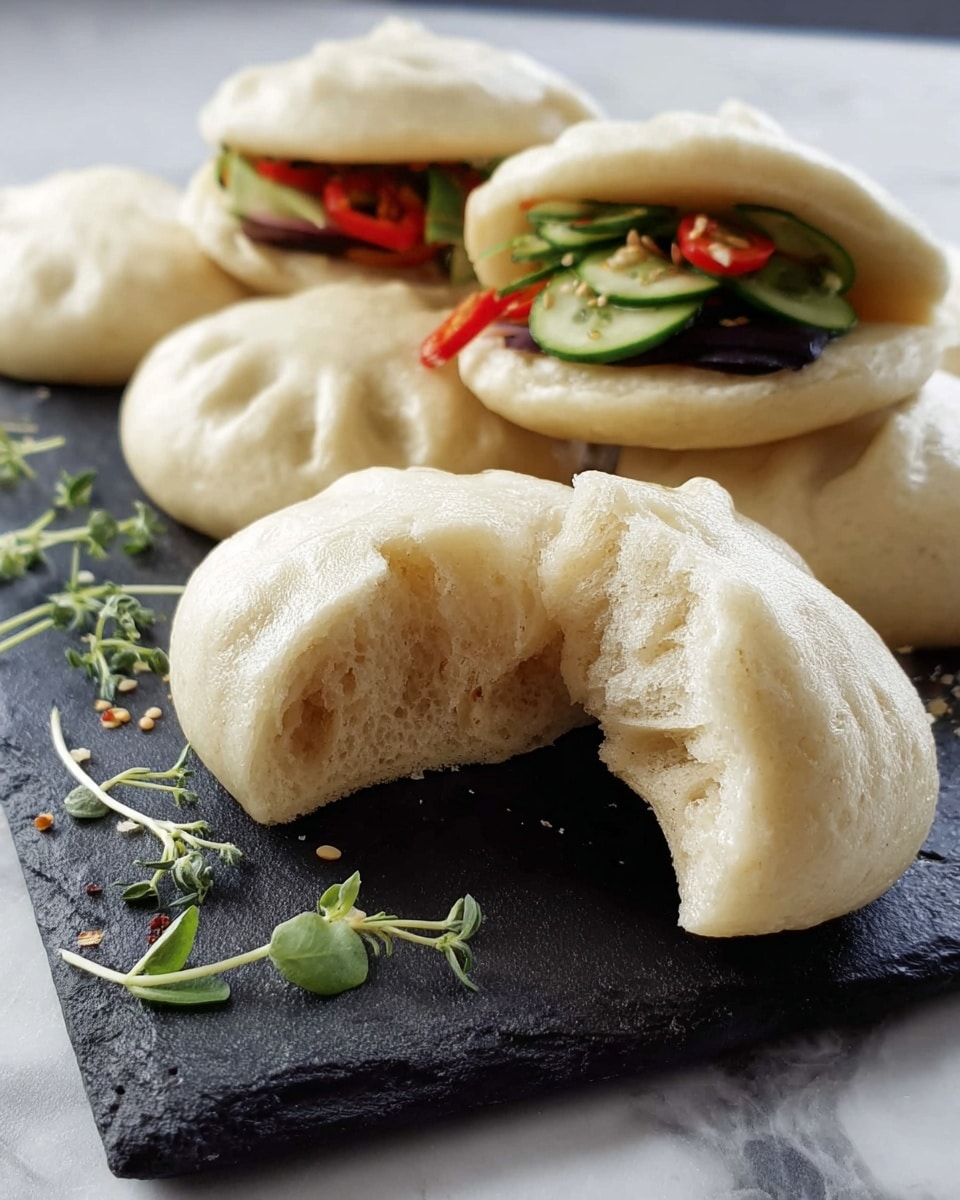
No Knead Steamed Buns are soft, fluffy, and surprisingly easy to make at home without any fuss. This simple recipe yields light and airy buns perfect for enjoying plain or filled with your favorite ingredients.
Ingredients
- 2 cups (250 g) cake or all purpose flour
- 1 teaspoon (3 g) instant dry yeast
- 1 teaspoon (4 g) white granulated sugar
- ¼ teaspoon salt
- ¾ cup (177 ml) lukewarm water
Instructions
- Step 1: In a medium bowl, whisk together the flour, yeast, sugar, and salt until evenly combined.
- Step 2: Stir in the lukewarm water using a rubber spatula until a soft, slightly sticky dough forms.
- Step 3: Lightly oil another bowl and transfer the dough into it. Cover the bowl and let the dough rise for 1 hour or until it doubles in size.
- Step 4: Once risen, turn the dough out onto a lightly floured board and knead gently for about a minute to release any air bubbles.
- Step 5: Divide the dough into 8 to 10 equal pieces and roll each piece into a smooth ball.
- Step 6: Roll each ball into an oval about 4 inches (10 cm) wide and 5 inches (11 cm) long.
- Step 7: Lightly brush the surface of each oval with oil to prevent sticking.
- Step 8: Fold each oval in half with the oiled side on the inside.
- Step 9: Place each shaped bun on a piece of parchment paper and let them rise again for 20 minutes to ensure softness.
- Step 10: Prepare your steamer. Place the buns on the steamer rack with at least 1 inch (2 cm) space between them to allow for expansion.
- Step 11: Cover the steamer with a towel-wrapped lid to prevent water dripping onto the buns. Place the steamer over medium heat.
- Step 12: Turn on the heat once the steamer is on the stove to allow the temperature to rise gradually.
- Step 13: When steam begins to appear, reduce the heat to medium-low and steam the buns for 8 minutes.
- Step 14: After steaming, turn off the heat but keep the lid on for an additional 5 minutes to avoid sudden temperature changes that can cause the buns to deflate.
- Step 15: Remove the buns from the steamer and serve immediately or store for later.
Tips & Variations
- Use cake flour for extra soft buns, or all-purpose flour for a slightly denser texture.
- Lightly oiling the dough before folding keeps the buns from sticking and makes them easier to open once steamed.
- Add fillings like sweet red bean paste or savory pork before the second rise for delicious stuffed buns.
- If you don’t have a steamer, you can improvise with a heatproof plate on a rack inside a large pot with a lid.
Storage
Store steamed buns in an airtight container or zip-lock bag in the refrigerator for up to 3 days. To reheat, steam them for 5 minutes or microwave covered with a damp paper towel until warm. They can also be frozen for up to 1 month; thaw before reheating.
How to Serve
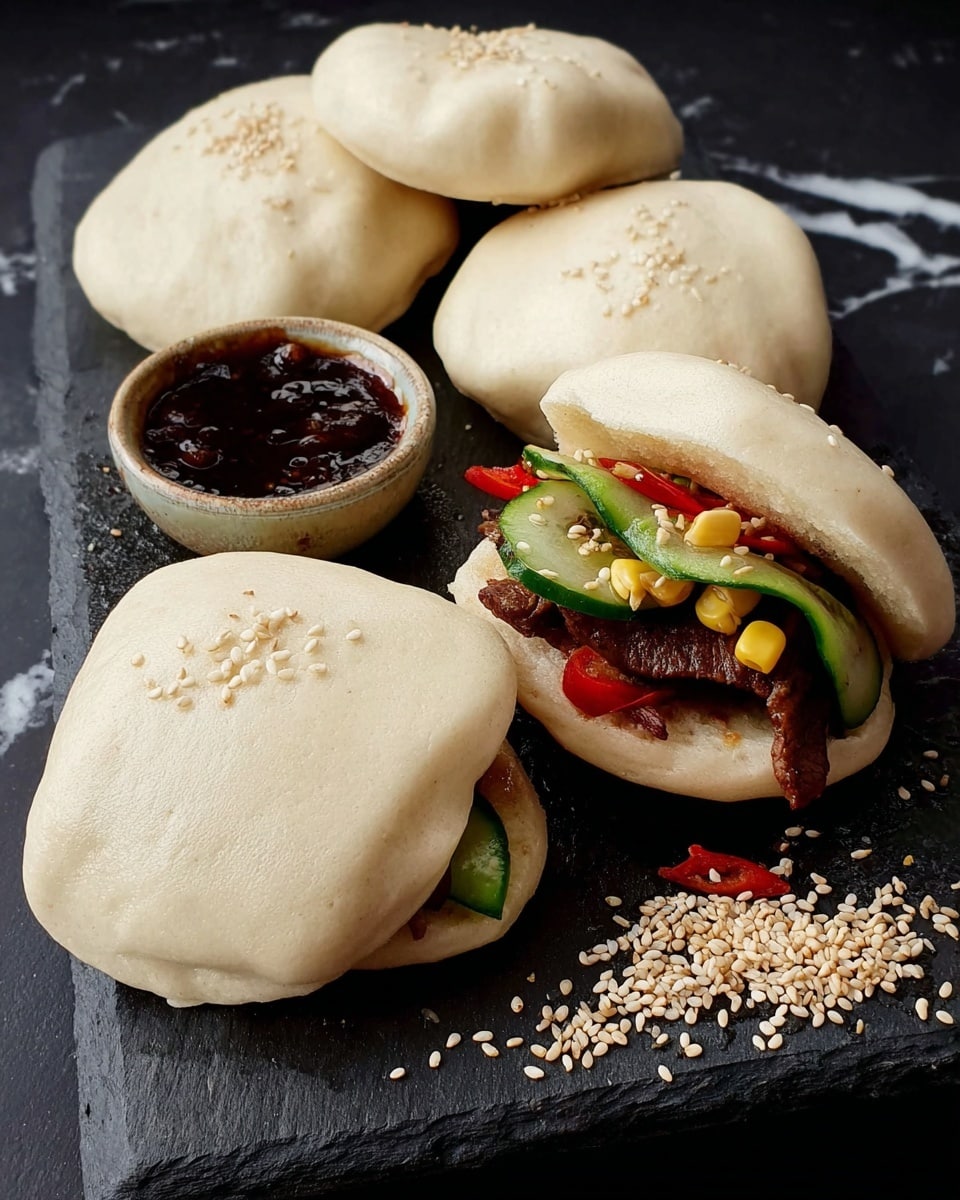
Serve this delicious recipe with your favorite sides.
FAQs
Can I use active dry yeast instead of instant dry yeast?
Yes, but you will need to activate active dry yeast in warm water with a pinch of sugar before mixing it into the flour.
Why do my steamed buns sometimes deflate after cooking?
This usually happens due to sudden changes in temperature. Leaving the lid on the steamer for a few minutes after turning off the heat helps the buns retain their shape and fluffiness.
PrintNo Knead Steamed Buns Recipe

Delightfully soft and fluffy No Knead Steamed Buns made with simple ingredients and minimal effort. These steamed buns have a pillowy texture achieved through a gentle rise and steaming method, perfect as a versatile base for savory or sweet fillings.
- Prep Time: 15 minutes
- Cook Time: 13 minutes
- Total Time: 1 hour 28 minutes
- Yield: 8 to 10 steamed buns 1x
- Category: Bread
- Method: Steaming
- Cuisine: Chinese
- Diet: Vegetarian
Ingredients
Dough Ingredients
- 2 cups (250 g) cake or all purpose flour
- 1 teaspoon (3 g) instant dry yeast
- 1 teaspoon (4 g) white granulated sugar
- ¼ teaspoon salt
- ¾ cup (177 ml) lukewarm water
Instructions
- Mix dry ingredients: Whisk together the flour, instant dry yeast, salt, and sugar in a medium bowl until well combined.
- Add water: Stir in the lukewarm water using a rubber spatula until a soft and slightly sticky dough forms.
- First rise: Lightly brush a separate bowl with oil and place the dough inside. Cover the bowl and let the dough rise in a warm spot for 1 hour or until it doubles in size.
- Knead to remove air bubbles: Turn the dough out onto a lightly floured surface and knead gently for about a minute to remove any trapped air.
- Portion and shape: Divide the dough into 8 to 10 equal pieces. Roll each portion into a ball, then roll each ball into a 4-inch (10 cm) wide by 5-inch (11 cm) long oval shape.
- Brush with oil: Lightly brush the top of each oval with oil to prevent sticking and make opening easier after steaming.
- Fold the dough: Fold each oval in half with the oiled side on the inside.
- Second rise: Place each folded bun on individual cut parchment paper squares. Let them rise for an additional 20 minutes to ensure a soft texture after steaming.
- Prepare to steam: Place the buns on the parchment paper into a steamer basket, ensuring at least 1 inch (2 cm) of space between buns to allow expansion.
- Steam buns: Cover the steamer with a towel-wrapped lid and place it over medium heat on the stove. Turn on the heat only once the steamer is in place to allow gradual temperature increase.
- Cook for 8 minutes: When steam starts evaporating from the pot, reduce heat to medium-low and steam the buns for 8 minutes.
- Rest after steaming: Turn off the stove but keep the lid on for an additional 5 minutes to prevent buns from deflating due to sudden temperature changes.
- Serve or store: Remove buns carefully and serve immediately with your choice of fillings, or refrigerate/freeze for later use.
Notes
- The dough is intentionally slightly sticky; avoid adding too much flour to keep buns soft.
- Covering the steamer lid with a towel prevents water droplets from falling onto buns and making them soggy.
- Do not overcrowd the steamer to allow buns to expand fully during steaming.
- Resting buns after steaming under the lid is essential to prevent deflation caused by sudden cooling.
- Use cake flour for a lighter, softer texture, but all-purpose flour works well too.
Keywords: No Knead Steamed Buns, Chinese Steamed Buns, Soft Steamed Buns, Easy Steamed Buns, Yeast Buns, Vegan Steamed Buns